
Indices Trading Market Analysis
Start indices trading with expert market insights and advanced tools.
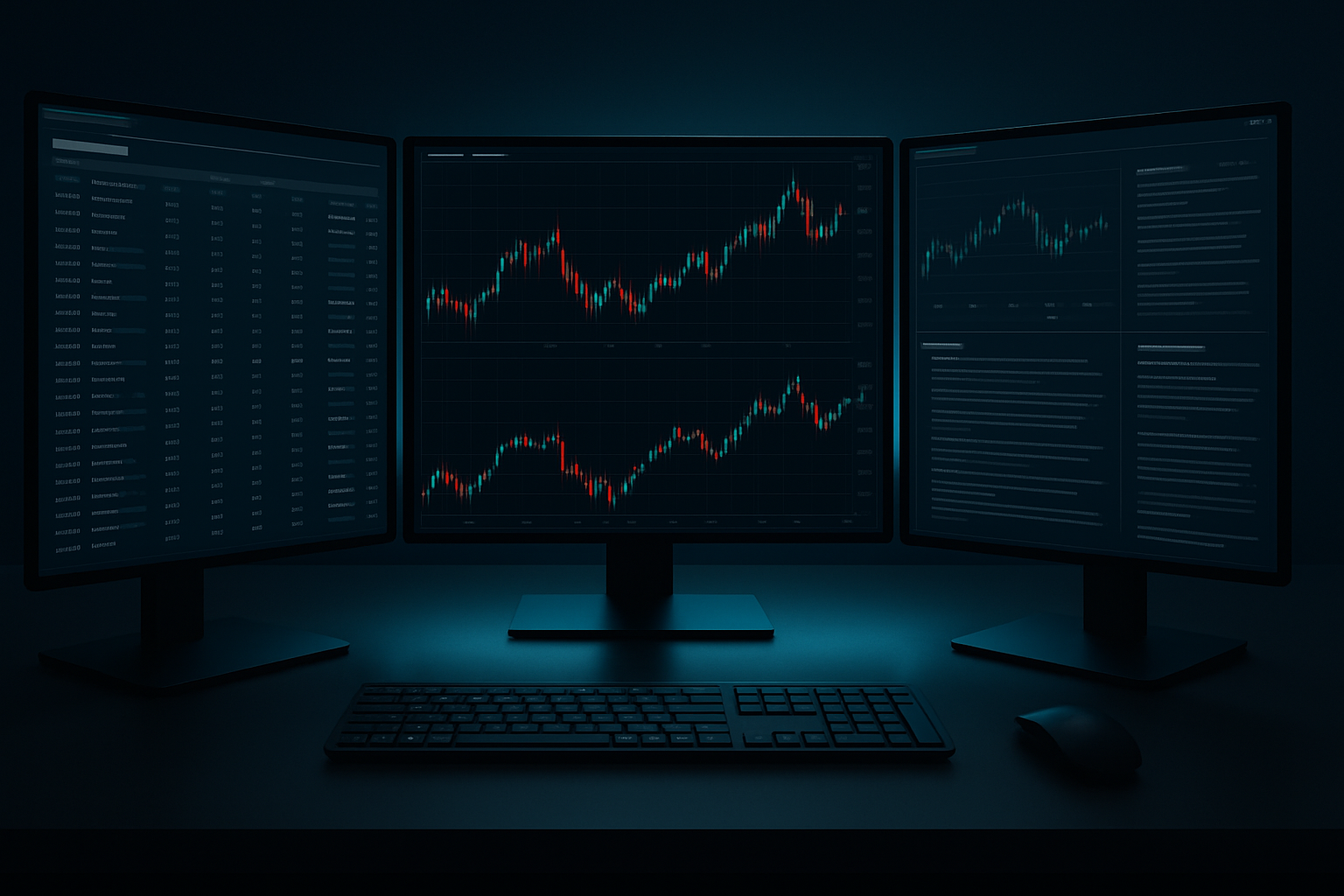
Analyze Current Market Conditions for Indices Trading
Market sentiment drives indices performance more than individual stock fundamentals. Economic data releases, central bank decisions, and geopolitical developments create volatility patterns that experienced traders can anticipate. The MSM 30 Index recently traded around 5,518 points with a 15.78% year-over-year gain, reflecting Oman’s economic recovery and oil price stabilization.
Global indices show different characteristics based on their underlying economies. European indices like the FTSE 100 and DAX 30 respond strongly to ECB monetary policy and Brexit-related developments. Asian indices including the Hang Seng and Nikkei 225 react to Chinese economic data and regional trade relationships. Understanding these correlations helps traders position themselves across multiple markets simultaneously.
Sector rotation within indices creates opportunities for CFD traders. When technology stocks outperform, tech-heavy indices like the NASDAQ 100 tend to rise faster than broad market indices. Energy sector movements significantly impact the MSM 30 due to Oman’s oil-dependent economy. Our platform provides real-time sector performance data to help identify these rotation patterns. Commodity prices, particularly oil and gold, influence indices performance through their weighted components and broader economic implications.
Exness Platform Tools for Market Analysis
Our MetaTrader 4 and MetaTrader 5 platforms provide comprehensive charting capabilities for indices analysis. Multiple timeframe analysis becomes essential when trading indices CFDs because these instruments often show different patterns on hourly versus daily charts. The platforms support custom indicators and Expert Advisors specifically designed for indices trading strategies.
Economic calendar integration helps traders anticipate market-moving events. GDP releases, employment data, and inflation reports directly impact indices performance. Our platform highlights high-impact events with automatic notifications, ensuring traders stay informed about potential volatility periods. Chart pattern recognition tools identify support and resistance levels that indices respect more consistently than individual stocks.
Risk Assessment in Current Market Environment
Volatility measurement becomes crucial for indices trading success. The VIX index, often called the “fear gauge,” provides insights into expected S&P 500 volatility over the next 30 days. Similar volatility indicators exist for other major indices, helping traders adjust position sizes and risk management strategies accordingly.
Correlation analysis between different indices reveals diversification opportunities and risk concentrations. During market stress periods, correlations between global indices tend to increase, reducing diversification benefits. Our platform provides correlation matrices updated in real-time, allowing traders to adjust their portfolio exposure across different geographical and sectoral indices.
Examine Technical Indicators for Indices Analysis
Moving averages provide the foundation for indices trend analysis. The 50-day and 200-day moving averages create significant support and resistance levels that indices respect consistently. When the MSM 30 Index trades above its 200-day moving average, it indicates a long-term uptrend, while breaks below suggest potential trend reversals.
Bollinger Bands help identify overbought and oversold conditions in indices trading. These bands expand during high volatility periods and contract during consolidation phases. Indices tend to respect Bollinger Band boundaries more reliably than individual stocks because they represent broader market consensus. Price action near the upper band suggests potential selling pressure, while approaches to the lower band indicate possible buying opportunities.
Momentum indicators like RSI and MACD provide entry and exit signals for indices CFD positions. RSI readings above 70 suggest overbought conditions, while levels below 30 indicate oversold scenarios. However, indices can remain overbought or oversold for extended periods during strong trends. MACD crossovers and divergences offer more reliable signals when combined with price action analysis and volume confirmation.
| Technical Indicator | Best Timeframe | Signal Strength | Application |
|---|---|---|---|
| Moving Average (50/200) | Daily/Weekly | High | Trend identification |
| RSI | 4H/Daily | Medium | Momentum analysis |
| MACD | Daily | High | Entry/exit timing |
| Bollinger Bands | 1H/4H | Medium | Volatility assessment |
Volume analysis in indices trading requires understanding that CFD volume represents trader interest rather than actual share transactions. High volume during breakouts confirms the strength of price movements, while low volume rallies or declines suggest potential reversals. Our platform displays volume histograms and volume-based indicators to help assess the conviction behind price movements.
Fibonacci retracement levels work particularly well with indices because these instruments tend to follow mathematical relationships during corrections. The 38.2%, 50%, and 61.8% retracement levels often provide support during pullbacks in uptrends or resistance during rallies in downtrends. Extensions at 127.2% and 161.8% help identify potential profit targets for trending moves.
Advanced Pattern Recognition
Chart patterns in indices trading offer higher reliability than individual stock patterns because they represent collective market behavior. Head and shoulders patterns, triangles, and flag formations appear more frequently and with greater predictive value in indices charts. Double tops and bottoms often coincide with significant economic events or policy changes that affect entire markets.
Candlestick patterns provide short-term trading signals for indices CFDs. Doji candles at key support or resistance levels suggest indecision and potential reversals. Hammer and shooting star formations near trend extremes offer entry opportunities with clearly defined risk levels. Our platform includes automatic pattern recognition tools that highlight these formations across multiple timeframes.
Develop Strategic Trading Approaches with Exness
Position sizing strategies for indices trading differ from individual stock approaches because indices typically show lower volatility but higher correlation during market stress. The 1% risk rule applies effectively to indices CFDs, but traders must account for leverage effects on position sizes. With leverage up to 1:200 available on our platform, a small percentage move in the underlying index translates to significant profit or loss potential.
Swing trading strategies work particularly well with indices because these instruments trend more consistently than individual stocks. Weekly and monthly chart analysis helps identify major trend directions, while daily charts provide entry and exit timing. The MSM 30 Index shows seasonal patterns related to quarterly earnings cycles and annual budget announcements that create predictable trading opportunities.
Scalping approaches require different considerations for indices trading. Major indices like the S&P 500 and FTSE 100 offer sufficient liquidity for scalping strategies, but execution speed becomes critical. Our platform provides sub-second execution speeds and minimal slippage for indices CFDs. Spread costs accumulate quickly with high-frequency trading, making our competitive spreads essential for scalping profitability.
Multiple timeframe analysis creates the foundation for successful indices trading strategies. Monthly charts identify long-term trends and major support/resistance levels. Weekly charts reveal intermediate-term patterns and swing trading opportunities. Daily charts provide entry timing and short-term risk management levels. Hourly charts offer precise entry and exit points for day trading approaches.
Portfolio Diversification Through Indices
Geographic diversification through indices CFDs reduces single-country risk while maintaining market exposure. Trading combinations of US, European, and Asian indices provides 24-hour market access and reduces correlation during normal market conditions. The MSM 30 Index offers exposure to Middle Eastern markets with different economic cycles than Western indices.
Sector-specific indices allow targeted exposure to particular industries without individual stock selection risk. Technology indices like the NASDAQ 100 provide pure tech exposure, while energy indices track oil and gas sector performance. Our platform offers CFDs on sector indices alongside broad market indices, enabling precise portfolio construction and hedging strategies.
Currency considerations become important when trading international indices through CFDs. USD-denominated positions in European or Asian indices create currency exposure that can enhance or reduce returns. Our swap-free accounts eliminate overnight financing costs, making longer-term indices positions more attractive for Omani traders following Islamic finance principles.
Execute Trades Using Market Data Analysis
Order execution strategies for indices CFDs require understanding market opening and closing dynamics. The first and last hours of trading sessions typically show higher volatility and wider spreads. European market opens at 09:00 GMT create opportunities in FTSE 100 and DAX 30 CFDs, while US market opens at 14:30 GMT drive S&P 500 and NASDAQ movements.
Limit orders work effectively for indices trading because these instruments tend to respect technical levels more consistently than individual stocks. Placing buy limit orders near support levels and sell limit orders near resistance provides better entry prices than market orders during volatile periods. Our platform supports all order types including trailing stops that automatically adjust as indices move in favorable directions.
Stop-loss placement in indices trading follows different rules than stock trading. Indices typically require wider stops due to intraday volatility, but they also respect major technical levels more reliably. Placing stops below significant moving averages or support levels provides better risk management than arbitrary percentage-based stops. Take-profit levels should account for the tendency of indices to test previous highs or lows before continuing trends.
Market timing considerations become crucial for indices CFD trading success. Economic data releases create predictable volatility spikes that experienced traders can exploit. GDP announcements, central bank meetings, and employment reports often trigger significant indices movements within minutes of release. Our economic calendar integration provides advance notice of these events with impact ratings and consensus forecasts.
Real-Time Execution Monitoring
Trade monitoring systems help optimize indices trading performance through detailed execution analysis. Slippage tracking reveals the difference between intended and actual execution prices, particularly important during high-volatility periods. Our platform provides execution statistics that help traders adjust their strategies based on actual trading costs rather than theoretical calculations.
Position management during trending markets requires different approaches than range-bound conditions. Trailing stops work well during strong trends but create excessive whipsaws during consolidation periods. Partial profit-taking at predetermined levels allows traders to capture gains while maintaining exposure to continued favorable moves. Our platform supports partial position closures and multiple take-profit levels for sophisticated position management.
Monitor Performance Through Data-Driven Metrics
Performance measurement in indices trading requires benchmarking against relevant market indices rather than absolute return targets. Beating the MSM 30 Index return while trading MSM 30 CFDs demonstrates skill beyond market timing. Risk-adjusted returns using Sharpe ratios provide better performance assessment than raw percentage gains because they account for volatility differences between trading periods.
Win rate analysis reveals the percentage of profitable trades, but this metric can be misleading without considering average win and loss sizes. Indices trading often produces lower win rates than stock trading because trends can take time to develop, but average wins typically exceed average losses when proper trend-following strategies are employed. Our platform provides detailed trade statistics including win/loss ratios and average holding periods.
Drawdown analysis measures the maximum peak-to-trough decline in account equity during specific periods. Indices trading generally produces smaller maximum drawdowns than individual stock trading because diversification within the index reduces single-security risk. However, systematic market declines can create significant drawdowns across all indices simultaneously, requiring proper position sizing and risk management.
Monthly and quarterly performance reviews help identify seasonal patterns and strategy effectiveness over different market conditions. Bull market strategies often fail during bear markets, while range-bound market approaches may underperform during trending periods. Tracking performance across different market regimes helps optimize strategy selection and position sizing for current conditions.
Advanced Analytics Integration
Correlation tracking between different indices positions reveals portfolio concentration risks that may not be apparent from individual trade analysis. High correlations between European and US indices during crisis periods can eliminate diversification benefits and increase overall portfolio risk. Our platform provides real-time correlation analysis to help manage these exposures.
Volatility-adjusted position sizing adapts trade sizes based on current market conditions rather than fixed percentage rules. During low volatility periods, larger positions may be appropriate to maintain consistent risk levels, while high volatility periods require smaller positions to avoid excessive account swings. Historical volatility analysis helps calibrate these adjustments for optimal risk management.
| Performance Metric | Calculation Method | Target Range | Frequency |
|---|---|---|---|
| Sharpe Ratio | (Return – Risk-free rate) / Standard deviation | Above 1.0 | Monthly |
| Maximum Drawdown | Peak-to-trough decline | Below 15% | Ongoing |
| Win Rate | Profitable trades / Total trades | 45-55% | Weekly |
| Risk-Reward Ratio | Average win / Average loss | Above 1.5 | Per trade |
Risk metrics monitoring includes Value at Risk (VaR) calculations that estimate potential losses over specific time periods with given confidence levels. A 5% daily VaR of $500 suggests that losses should not exceed $500 on 95% of trading days. These calculations help size positions appropriately and set realistic expectations for trading performance variability.
Performance attribution analysis separates returns generated by market timing, security selection, and leverage utilization. In indices CFD trading, market timing typically contributes the majority of returns because security selection is eliminated through index diversification. Understanding these contributions helps focus improvement efforts on the most impactful areas of trading strategy.
❓ FAQ
What are indices in trading?
Indices are baskets of stocks representing specific market sectors or economies, allowing traders to gain broad market exposure through a single instrument.
How does leverage work with indices CFDs on Exness?
Leverage up to 1:200 allows traders to control larger positions with smaller capital, amplifying both potential profits and risks.
Why is market analysis important for indices trading?
Indices respond to broader economic and geopolitical factors, making market analysis essential to anticipate movements and manage risks effectively.
Can I trade international indices on a swap-free account?
Yes, Exness offers swap-free accounts suitable for Islamic finance principles, eliminating overnight financing costs on indices CFDs.